
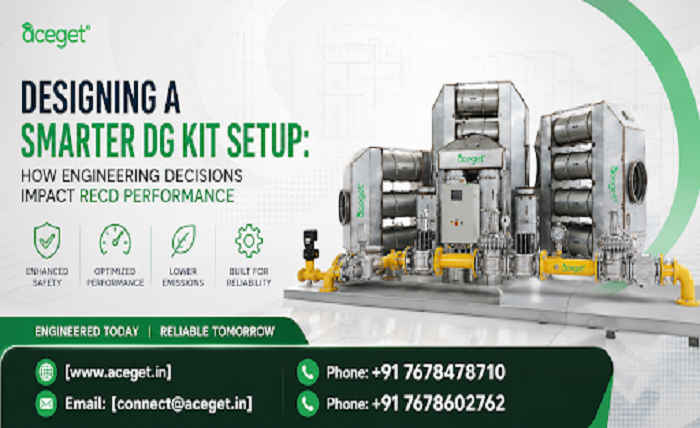
When businesses think about improving diesel generator performance, the focus usually goes straight to equipment, installing an RECD DG kit or adding a Dual Fuel Kit. But in practice, the effectiveness of any emission control solution depends heavily on something that is often overlooked: the design and engineering of the overall DG Kit setup.
A Retrofit Emission Control Device is not an isolated component. It works as part of a larger system that includes the engine, exhaust layout, load pattern, fuel quality, and installation geometry. Even a highly advanced RECD in DG kit solution can underperform if the surrounding system is not designed correctly.
Why DG Kit Design Matters More Than Most Businesses Realize
A diesel generator is not just an engine, it is a complete system involving combustion, exhaust flow, heat management, and load response.
When an RECD is added, it introduces additional interaction points within this system. If the DG Kit is not designed properly, it can lead to:
- Uneven exhaust flow
- Excessive backpressure
- Reduced regeneration efficiency
- Inconsistent emission reduction performance
- Increased maintenance frequency
This is why engineering design is as important as the RECD itself.
Aceget emphasizes system-level planning rather than component-level installation to ensure that every Diesel Generator Kit performs optimally after integration.
Exhaust Layout: The Hidden Factor That Affects Performance
One of the most critical design elements in a DG Kit is the exhaust routing.
The path that exhaust gases take from the engine to the RECD system directly impacts efficiency.
Poor exhaust design can cause:
- Heat loss before reaching catalytic components
- Pressure imbalance within the system
- Reduced effectiveness of particulate filtration
- Irregular regeneration cycles
A well-designed RECD DG kit setup ensures:
- Smooth exhaust flow without unnecessary bends
- Controlled temperature retention
- Balanced pressure distribution
- Efficient delivery of gases to treatment components
Even small design improvements in exhaust layout can significantly enhance overall system performance.
Load Patterns and Their Influence on Emission Control
Not all generators operate the same way. Some run continuously at stable loads, while others operate in highly variable conditions.
Load behavior directly affects emission characteristics.
Stable load operation:
- Predictable emission output
- Easier regeneration cycles
- Consistent RECD performance
Variable load operation:
- Fluctuating exhaust temperature
- Irregular soot generation
- More complex regeneration management
An RECD in DG kit system must be designed to handle both scenarios effectively.
Aceget accounts for real-world load profiles during system design to ensure that emission control remains stable regardless of operational conditions.
Thermal Management: The Most Underrated Design Factor
Temperature plays a crucial role in how effectively an RECD functions.
If exhaust gases are too cool, catalytic reactions slow down. If they are too hot, system components may experience stress.
Proper DG Kit design ensures:
- Optimal temperature range entering the RECD system
- Heat retention where needed
- Protection of sensitive components from overheating
- Balanced thermal distribution across the exhaust path
Thermal imbalance is one of the most common reasons for reduced performance in poorly designed installations.
Aceget engineers DG Kit layouts to maintain stable thermal conditions that support long-term RECD efficiency.
Backpressure Control: Balancing Efficiency and Engine Health
Backpressure refers to resistance in the exhaust system. While some level of backpressure is expected, excessive resistance can impact engine performance.
If not properly managed, it can lead to:
- Reduced engine efficiency
- Increased fuel consumption
- Higher wear on engine components
- Reduced lifespan of the Diesel Generator Kit
A well-engineered RECD DG kit maintains a controlled backpressure range that supports emission reduction without affecting engine performance.
This balance is critical and must be addressed during system design, not after installation.
Placement Strategy: Where the RECD Is Installed Matters
The physical placement of the RECD within the DG Kit setup significantly affects performance.
Key considerations include:
- Distance from the engine exhaust outlet
- Accessibility for maintenance
- Exposure to heat zones
- Structural support and vibration control
Incorrect placement can reduce efficiency or increase maintenance complexity.
Aceget carefully evaluates site conditions before finalizing RECD placement to ensure long-term operational stability.
Integration With Dual Fuel Systems
When a Dual Fuel Kit is part of the DG Kit setup, system design becomes even more important.
Dual fuel operation changes combustion characteristics, which directly affects:
- Exhaust composition
- Temperature patterns
- Soot generation rates
- Regeneration frequency of RECD systems
When combined properly, a RECD in DG kit and Dual Fuel Kit create a highly optimized system.
But if not engineered correctly together, performance inconsistencies may occur.
Aceget integrates both technologies at the design stage to ensure compatibility and stable long-term operation.
Importance of Site Conditions in DG Kit Engineering
Every installation environment is different.
Factors such as:
- Ambient temperature
- Dust levels
- Humidity
- Space constraints
- Ventilation conditions
all influence how a DG Kit performs in real-world conditions.
A design that works well in one facility may not perform the same in another.
This is why standardized installation approaches often fail to deliver consistent results.
Aceget evaluates site-specific conditions before finalizing RECD DG kit configurations.
How Poor Design Leads to Long-Term Operational Issues
When DG Kit engineering is not properly planned, problems often appear gradually rather than immediately.
These may include:
- Gradual drop in emission control efficiency
- Frequent regeneration cycles
- Unexpected maintenance requirements
- Reduced fuel efficiency in the Diesel Generator Kit
- Inconsistent system performance under load changes
Such issues are often mistakenly attributed to equipment failure, when in reality they originate from design limitations.
The Role of Engineering Expertise in DG Kit Success
Technology alone is not enough. The way it is implemented determines its effectiveness.
Successful RECD DG kit performance depends on:
- System engineering knowledge
- Field experience
- Understanding of generator behavior
- Integration expertise
- Real-world testing and validation
Aceget combines these factors to design solutions that perform reliably under actual operating conditions rather than theoretical assumptions.
Conclusion
A Diesel Generator Kit is a complex system where every design decision influences long-term performance. Adding an RECD DG kit or integrating a Dual Fuel Kit is not just about installation, it is about engineering the entire system for stability, efficiency, and sustainability.
From exhaust layout and thermal management to load behavior and backpressure control, every element plays a role in determining how effectively an RECD in DG kit will perform over time.
Aceget Private Limited focuses on this engineering-first approach, ensuring that every DG Kit installation is designed for real-world conditions rather than just technical specifications. When system design and technology work together, businesses achieve not only cleaner emissions but also more reliable and efficient generator performance for the long term.